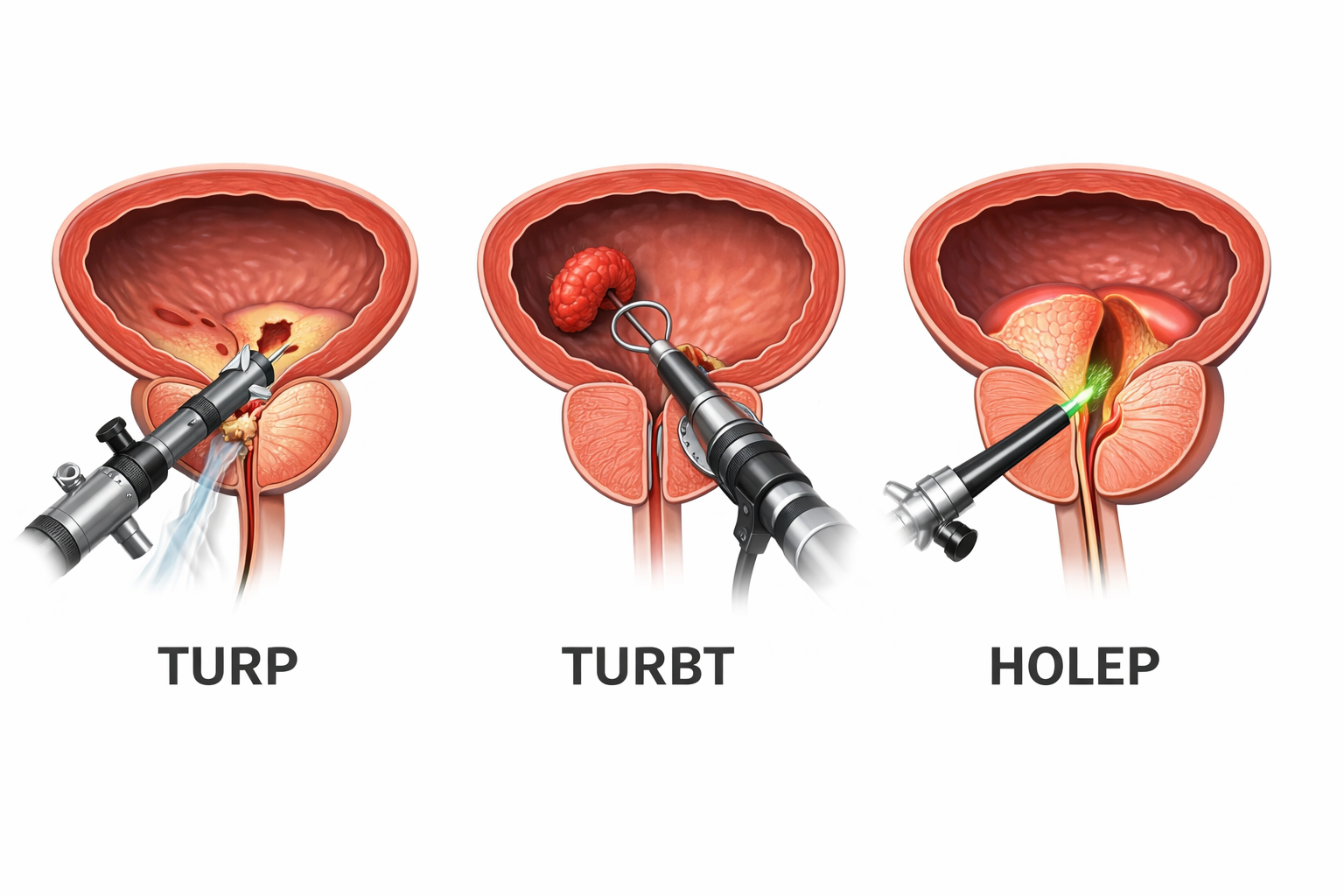
Transurethral Resection of the Prostate (TURP), Transurethral Resection of Bladder Tumor (TURBT), and Holmium Laser Enucleation of the Prostate (HoLEP) are advanced endoscopic procedures used to diagnose and treat conditions affecting the prostate and bladder. These procedures are performed through the urethra without external incisions, making them minimally invasive and highly effective. TURP and HoLEP are primarily used to treat benign enlargement of the prostate that obstructs urine flow, while TURBT is commonly performed to remove bladder tumors and obtain tissue samples for further evaluation. With modern surgical techniques and precision technology, these procedures offer quicker recovery, improved urinary function, and reduced hospital stays. Under the care of experienced urologists like Dr. Neil N. Trivedi, patients benefit from safe, evidence-based treatments designed to restore comfort and urinary health.
Several conditions can lead to the need for procedures such as TURP, TURBT, or HoLEP. One of the most common causes is benign prostatic hyperplasia (BPH), a non-cancerous enlargement of the prostate gland that commonly affects aging men. As the prostate grows, it can compress the urethra and obstruct urine flow. Bladder tumors, which may arise due to factors such as smoking, exposure to certain chemicals, chronic bladder irritation, or genetic predisposition, may require TURBT for diagnosis and removal. In some cases, recurrent urinary infections, bladder stones, or persistent urinary obstruction can also lead doctors to recommend surgical intervention. Understanding the underlying cause helps determine the most appropriate procedure and ensures a personalized treatment approach.
Patients who require TURP or HoLEP often experience urinary symptoms caused by prostate enlargement. These may include a weak urine stream, difficulty starting urination, frequent urination—especially at night—urgency, incomplete bladder emptying, or straining while passing urine. Some individuals may also experience urinary retention, where the bladder cannot empty completely. In the case of bladder tumors, symptoms may include blood in the urine (hematuria), pelvic discomfort, frequent urination, or unexplained urinary irritation. While these symptoms can vary in severity, persistent urinary problems should not be ignored, as early evaluation can prevent complications and improve treatment outcomes.
Accurate diagnosis is essential before deciding on procedures such as TURP, TURBT, or HoLEP. The evaluation process typically begins with a detailed medical history and physical examination. Doctors may perform urine tests to detect infection or blood, prostate-specific antigen (PSA) tests to assess prostate health, and imaging studies such as ultrasound or CT scans to evaluate the urinary tract. Cystoscopy, a procedure that allows direct visualization of the bladder and urethra using a thin camera, may be used to identify bladder tumors or structural abnormalities. Urodynamic studies may also be recommended to assess bladder function and determine the extent of urinary obstruction. These diagnostic steps help the urologist recommend the most suitable treatment plan for each patient.
TURP, TURBT, and HoLEP represent effective surgical solutions for different urological conditions. TURP is widely considered a standard procedure for relieving urinary obstruction caused by prostate enlargement. During this procedure, excess prostate tissue blocking the urethra is removed using specialized instruments. HoLEP is a more advanced laser-based technique that uses a holmium laser to precisely remove obstructive prostate tissue, often allowing treatment of larger prostates with minimal bleeding and faster recovery. TURBT, on the other hand, focuses on removing abnormal growths or tumors from the bladder lining. It also allows tissue samples to be sent for pathological examination to determine whether the tumor is benign or cancerous. The choice of procedure depends on the patient’s diagnosis, prostate size, tumor characteristics, overall health, and treatment goals.
After undergoing TURP, TURBT, or HoLEP, patients typically require a short period of monitoring to ensure proper recovery. A temporary urinary catheter may be placed to help drain urine and allow the surgical area to heal. Patients are generally advised to stay well hydrated, avoid heavy lifting, and limit strenuous activities for a few weeks. Mild urinary discomfort, temporary urgency, or slight blood in the urine may occur during the early recovery phase and usually resolves gradually. Regular follow-up visits are important to monitor healing, assess urinary function, and detect any signs of recurrence, especially in cases involving bladder tumors.
Although these procedures are considered safe and effective, as with any surgery, certain risks may exist. Possible complications include temporary bleeding, urinary tract infection, difficulty urinating, or irritation of the urinary tract. In rare cases, patients may experience retrograde ejaculation after prostate surgery, where semen flows backward into the bladder during ejaculation. Bladder tumor procedures may carry a small risk of recurrence, requiring periodic monitoring. Experienced surgical care and proper post-operative guidance significantly reduce the likelihood of complications and support smooth recovery.
Men experiencing persistent urinary problems such as weak urine flow, difficulty urinating, frequent nighttime urination, or blood in the urine should seek medical evaluation promptly. Early consultation with a urologist is especially important if symptoms worsen, cause discomfort, or interfere with daily life. Individuals with a history of bladder tumors or recurrent urinary issues should also maintain regular follow-up visits. Timely diagnosis and expert care can prevent complications, improve quality of life, and ensure that conditions affecting the prostate or bladder are treated effectively and safely.
Caring for Advanced Urological Procedures for Prostate and Kidney Care Doctor in Hyderabad.
Chat With Me